
5 Signs Your Website Needs a Redesign (Not Just a Refresh)
There's a moment every business owner experiences when they look at their website and think, "This isn't working anymore." Maybe you're comparing it to a competitor's sleek new site. Maybe you're noticing that traffic is up but inquiries are down. Maybe you just have a nagging feeling that your website isn't representing your business the way it should.
The instinct is usually to jump straight to "we need a new website." But that's not always the answer. Sometimes what you need is a refresh—updated copy, new imagery, some design tweaks to modernize the look. A refresh is faster, more affordable, and can solve specific problems without rebuilding everything from scratch.
Other times, though, a refresh is like putting a fresh coat of paint on a house with structural issues. It might look better temporarily, but the fundamental problems remain. That's when you need a full redesign.
Understanding the difference can save you thousands of dollars and months of frustration. So how do you know which one you actually need?
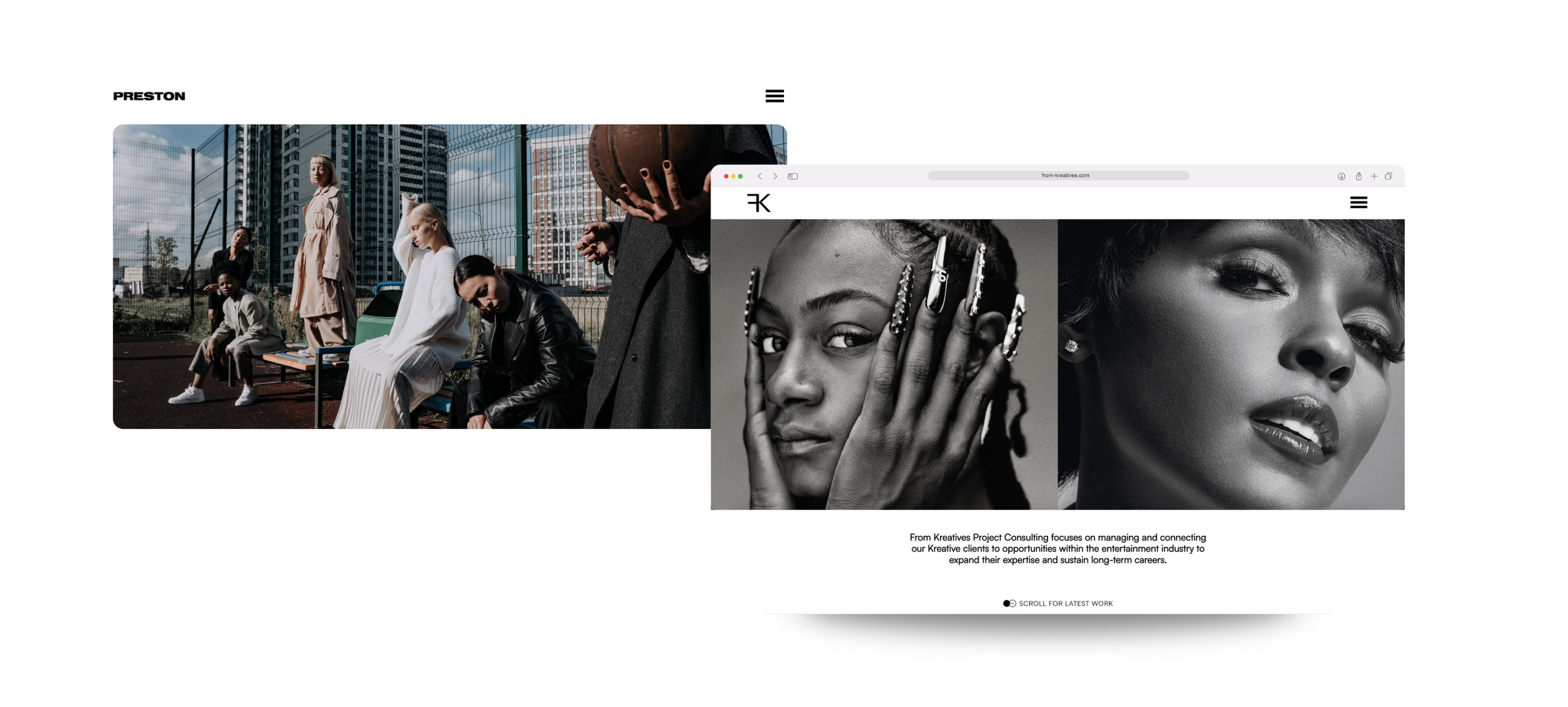
Refresh vs. Redesign: What's the Difference?
A website refresh works within your existing structure and strategy. You're keeping the same pages, the same general user flow, and the same foundational approach. You're just improving what's already there. This might mean updating your visual design to feel more current, rewriting homepage copy to better reflect your value proposition, adding new case studies or testimonials, or optimizing a few key pages for better conversion.
Refreshes are relatively quick—often a few weeks rather than months. They're also more budget-friendly because you're not rebuilding from the ground up. If your website's strategy is sound and the structure works but it just feels dated or could use some polish, a refresh is probably the right call.
A website redesign, on the other hand, goes back to the foundation. You're rethinking your entire strategy, reconsidering who you're targeting and what you want them to do, restructuring your information architecture and user journeys, rebuilding your design system from scratch, and often changing platforms or underlying technology. A redesign addresses fundamental business problems, not just aesthetic ones.
Redesigns take longer—typically two to four months for a strategic, custom project. They cost more because you're investing in strategy, research, and building something truly custom rather than tweaking what exists. But when done right, a redesign doesn't just make your site look better. It transforms how your website performs as a business asset.
So which do you need? Here are five clear signs that it's time for a full redesign, not just a refresh.
1. Your Business Model Has Fundamentally Changed
When you first built your website, maybe you were a solo consultant offering one-on-one services. Now you've built a team, developed a signature methodology, and shifted to working with larger clients on retainer. Or perhaps you started as a service provider and have since launched a product line that needs e-commerce functionality your current site can't support.
These aren't small tweaks. When your business model shifts, your website needs to shift with it. The navigation that made sense for three service offerings doesn't work when you now have ten. The homepage that positioned you as an accessible solopreneur undermines your credibility now that you're competing for enterprise contracts. The contact form designed for quick consultations doesn't gather the information you need to qualify six-figure project leads.
I worked with a brand strategist last year who had this exact situation. She'd built her initial website when she was doing $5,000 brand identity packages for solopreneurs. Five years later, she was commanding $25,000 for comprehensive brand strategy with Fortune 500 clients. Her website still showed the small-business pricing and positioning. Every sales conversation started with her having to overcome the perception that she was too small for enterprise work.
We didn't refresh that site. We redesigned it completely. New messaging that spoke to corporate decision-makers. Case studies that showcased business impact, not just pretty logos. A completely different user journey that qualified leads before they ever booked a call. That required rethinking everything from the ground up.
If your revenue model has changed, your target client has shifted significantly, or you've added major new offerings that your site wasn't built to support, you need a redesign.
2. Your Conversion Rate Is Declining (or Never Was Good)
Traffic without conversions is just an expensive hobby. If people are visiting your website but not taking the actions you need them to take—booking calls, requesting quotes, making purchases, signing up for your email list—something fundamental is broken.
Sometimes this shows up gradually. Your conversion rate used to be 3%, and over the past year it's slowly declined to 1.5%. Other times it's been bad from the beginning, but you didn't have enough data to know it. Now you're looking at your analytics and realizing that 98% of visitors leave without doing anything meaningful.
A refresh might help if the problem is isolated to one or two specific pages. Maybe your contact form is too long, or your pricing page doesn't have a clear next step. But if the issue is systemic—high bounce rates across the site, visitors who can't figure out what you do or why it matters, unclear paths from awareness to action—you need a strategic redesign.
This is where conversion-focused design becomes essential. A redesign lets you rebuild user journeys from scratch based on how people actually move through your site and what would motivate them to take action. You can restructure your information architecture so visitors find what they need. You can redesign your calls-to-action to remove friction and make the next step obvious.
I've seen this play out repeatedly. A business will refresh their site—new colors, updated photos, rewritten copy—and see a small temporary bump in conversions. But within a few months, they're back where they started because the underlying structure still creates the same friction points. The form is still in the wrong place. The value proposition is still buried. The user journey still requires too many clicks to get anywhere meaningful.
When conversion problems are structural, you need structural solutions. That's a redesign.
3. Your Brand Has Evolved But Your Website Hasn't
Brand evolution is natural and necessary as your business matures. Maybe you went through a professional rebrand—new logo, new color palette, new messaging framework. Or perhaps your positioning has shifted as you've found your niche and clarified who you serve. You might have started scrappy and DIY, but you've since invested in professional photography, refined your voice, and developed a sophisticated brand presence.
If your website still reflects the old version of your brand, you have a serious credibility problem. Potential clients visit your site and see a disconnect between the brand they encountered on Instagram or in a referral conversation and what they're actually experiencing on your website. That disconnect creates doubt.
This happens a lot with businesses that DIY'd their first website and have since grown into needing something more professional. The Squarespace template you customized in 2020 served its purpose then, but now you're pitching to bigger clients who expect a level of polish that your current site just doesn't deliver. You can feel the gap between how you present in person or in proposals and how you show up online.
A rebrand without updating your website is like getting a professional headshot but still using your college Facebook photo on LinkedIn. The investment you made in your brand identity doesn't pay off if your primary digital touchpoint contradicts it.
This isn't something a refresh can fix. Sure, you could update your logo and swap in your new brand colors. But if your brand strategy has matured—if your messaging is more sophisticated, your positioning is clearer, your visual system is more refined—your website needs to be rebuilt around that new foundation. The layout, the content structure, the design patterns, the user experience—all of it should express your evolved brand, not just display its surface-level elements.
4. Mobile Experience Is Actually Broken
Everyone knows mobile matters. More than 60% of web traffic comes from mobile devices. But there's a difference between a mobile experience that's imperfect and one that's actually broken.
Imperfect might mean your desktop navigation doesn't translate perfectly to mobile, so it's a little clunky but still functional. Broken means your menu doesn't work on phones at all. Imperfect means your contact form is usable on mobile but not optimized. Broken means the form fields don't display correctly on smaller screens, making it nearly impossible to submit.
If your website wasn't built with a mobile-first approach—and many sites from even just a few years ago weren't—you might be losing a huge percentage of potential conversions simply because the mobile experience is so frustrating that people give up.
This often surfaces in analytics. You'll see desktop conversion rates at 4% but mobile at 0.8%. That's not because mobile visitors are less qualified. It's because your site is actively preventing them from converting.
A refresh can improve mobile experience if the bones are good. You can optimize images, adjust button sizes, tweak spacing. But if your site was fundamentally designed for desktop and mobile was an afterthought, you need a redesign that puts mobile experience at the center of every decision.
I recently worked with an e-commerce brand whose mobile checkout process had a 94% abandonment rate. Their desktop experience was smooth, but on mobile, the checkout flow required so much zooming and scrolling that most people gave up before completing a purchase. We couldn't fix that with a refresh. We rebuilt the entire checkout experience with mobile as the primary design target, and mobile conversions tripled within the first month.
When mobile isn't just suboptimal but actually dysfunctional, you need to rebuild.
5. Your Website Actively Hurts Your Credibility
This is the harshest reality to face, but it's crucial: sometimes your website makes you look less professional, less capable, and less trustworthy than you actually are. Instead of building confidence with potential clients, it creates doubt.
The signals are usually obvious once you know to look for them. Broken links that lead nowhere. Images that don't load or display incorrectly. Outdated information—team members who left two years ago still on your About page, case studies from 2019, blog posts that haven't been updated since before the pandemic. Technology that screams "old"—a site that takes ten seconds to load, plugins that no longer work, security warnings that browsers display before letting visitors access your site.
Sometimes it's about comparison. You look at your competitors' websites and yours feels like it's from a different era. They have video, thoughtful animations, sophisticated layouts. You have static images and text blocks that look like they were designed in 2015. Which they probably were.
This credibility gap becomes painfully clear when you're trying to close high-value deals. A prospect is considering investing $50,000 in your services, but your website looks like a $500 DIY job. The cognitive dissonance is hard to overcome. They start wondering: if you can't invest in your own digital presence, how can you be trusted to deliver excellence for them?
Here's the thing about credibility issues: a refresh might mask them temporarily, but it won't solve them. You can update your color scheme and swap in better photos, but if the underlying structure and technology are outdated, people will still sense it. Modern web design isn't just about aesthetics. It's about performance, functionality, and the subtle cues that signal professionalism and attention to detail.
When your website is actively working against you—when it's a liability rather than an asset—you need a complete rebuild.
What a Real Redesign Actually Involves
If you've recognized your website in any of these five signs, you're probably realizing a refresh won't cut it. So what does a strategic redesign actually look like?
It starts with strategy and discovery, not design. Before anyone opens Figma, you need to understand your business goals, your ideal clients, your competitive landscape, and what success looks like. This means stakeholder interviews, user research, analytics analysis, and competitive audits. You're gathering the insights that will inform every decision that follows.
Then comes information architecture and user experience planning. How should your site be structured? What pages do you actually need? How do visitors move from awareness to consideration to decision? What content supports each stage of that journey? This phase determines whether your redesigned site will actually achieve your business goals or just look pretty.
Only after strategy and structure are defined does visual design begin. And even then, it's not about personal preference or what's trendy. It's about creating a design system that serves your brand, speaks to your audience, and supports conversion. Every choice—typography, color, layout, interaction patterns—is strategic.
Development follows design, and if you're working with a good partner, this phase includes building in SEO from day one, ensuring accessibility, optimizing for performance, and setting up analytics so you can measure what's working. This is also where choosing the right platform matters—whether Squarespace, Shopify, or custom development depends on your specific needs.
Finally, a real redesign includes testing, refinement, and a plan for ongoing optimization. Your website doesn't finish when it launches. That's when you start gathering real user data and continuously improving.
This process takes time—usually 8-12 weeks for a comprehensive strategic redesign. It costs more than a refresh because you're solving fundamental business problems, not just updating aesthetics. But the ROI is completely different. A well-executed redesign doesn't just make your site look better. It transforms how your website performs as a sales tool, credibility builder, and business asset.
Making the Right Call
Not every website problem requires a complete redesign. Sometimes a strategic refresh is exactly right. But when you're facing fundamental issues—business model changes, conversion problems, brand evolution, broken mobile experience, or credibility gaps—trying to fix them with surface-level updates is like rearranging deck chairs.
If you're recognizing your website in these signs and you're ready to explore what a strategic redesign could do for your business, let's talk. At Golden Launch Creative, we specialize in helping growing brands transform their digital presence through strategic website design that actually drives business results.
The first step is just a conversation about where you are and where you're trying to go. Book a discovery call and let's figure out together whether a refresh or redesign is the right move for your business.
